Teacup Trees Workshop-27th November

Here’s the requirements list for Jane Fairweather’s Workshop on Saturday 27th November. Don’t these photos look wonderful? If you’d like to attend but haven’t yet booked your place, please contact Margaret Richards.

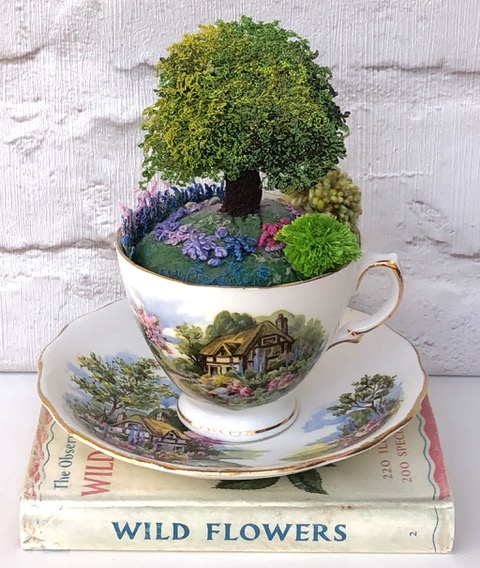
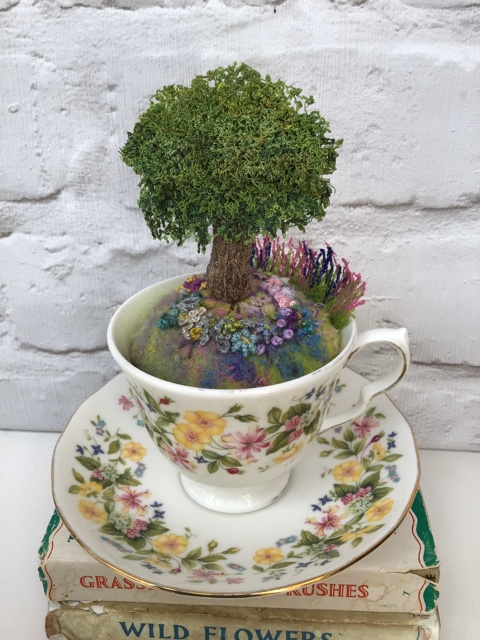
Teacup Trees – 

3D Oak Trees with hand and machine embroidery

Tutor – Jane Fairweather

n.b. There will be a charge of £5 per person payable to the tutor to cover specialist items such as dissolvable film, pre-felt, merino wools, wire, Oasis etc which she will provide.  Some cups will be available to purchase approx. £4 – £7.50 if required.

REQUIREMENTS LIST:

Sewing machine with the ability to do free motion embroidery & extension table if you have one.   Machine instruction book.   Extension lead.

Darning/embroidery foot to fit the machine + at least 4 bobbins. 

An embroidery hoop preferably 8”. 

Machine embroidery threads –  ordinary Sylko type threads or Madeira Viscose/Rayon 40 or similar.  In various shades of green and brown – think tree colours.   If you want to do an Autumn tree, bring threads in those shades/tones. 

A few hand threads in plant & flower colours – green, pink, blue etc.    Perle is good but you can use stranded cotton.  Thicker threads such as wool also can be used in small areas.

A few small pieces of soft fabric in colours to match your cup – scrim, merino wool if you have any – I will provide some. 

Basic sewing kit – small, sharp scissors, spare machine needles, hand embroidery needles including large eyed ones for wool, small screwdriver for tightening hoop. 

Fine Felt tip pen in a dark colour.   

Teacup or similar vessel.   Size 7 – 9cms diameter.   It does not have to a picture on it.   Milk jugs not usually suitable due to their shape.

Felting needle and foam or brush mat.   A Clover Needle felting tool is useful.   We can share these items so don’t buy specially for this workshop.

Notebook and pen if you wish to take notes.  
November meeting

On Monday 8th November we welcome Judy Preston as our speaker. Judy’s speciality is eco-dyeing and the talk will explain the fascinating business of creating beautiful fabrics with plants.

Judy cultivates her own dye garden at her home in Sutton Coldfield and will be bringing a full range of samples for us to see, together with eco-dyed upcycled clothing and upcycled cotton for quilting. There will also be eco-dyed scarves and bags for sale.

Eco-dyed fabrics can be a wonderful base for stitch or embellishments of all kinds, as are ecodyed papers, so there will definitely be something of interest for us stitchers.

What’s On

Take a look at our What’s On page for information about next week’s Weavers Spinners and Dyers Open Day. The Textile Fair at Compton Verney is also taking place next weekend. If you have time, you can do them both!

Bye for now

October Stitch of the Month

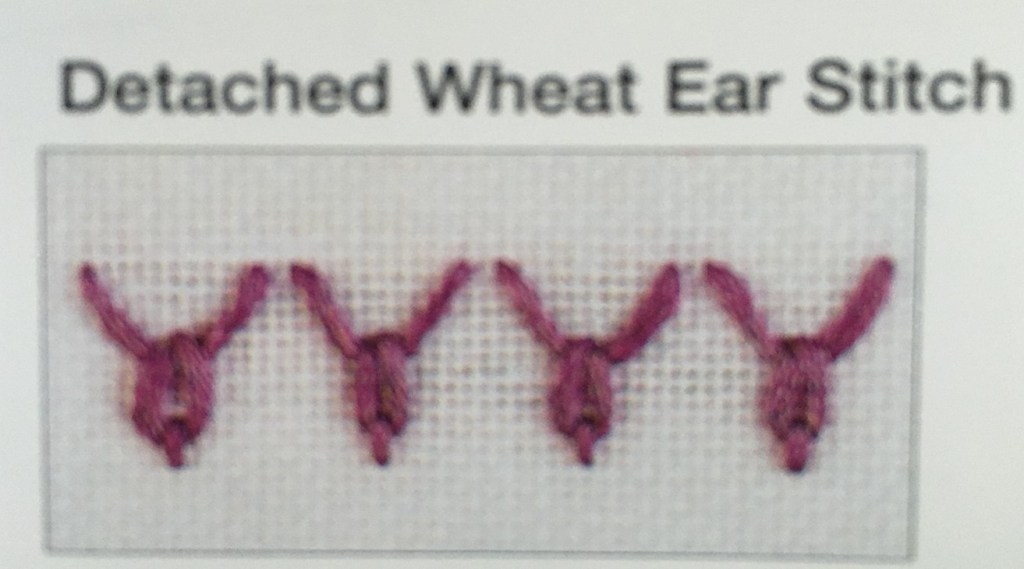
This month our challenge is Oxhead stitch (also known as Tete-de-boeuf or Detached Wheat Ear Stitch)

 Instructions:
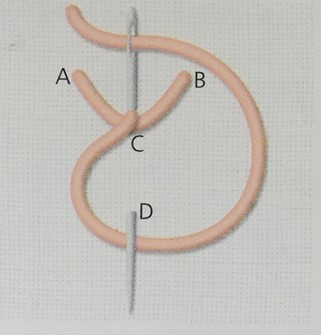
Make a loose stitch from A to B. Bring the needle up, over the thread half-way between A and B (at C). Re-insert needle at C, holding a loop of thread with thumb and bring point up and over the loop directly below at D. Pull the thread through and draw up gently to make a chain. Secure with a small straight stitch.

NOTE: Mary Thomas’s Dictionary of Embroidery Stitches (1934) describes Tete-de-boeuf stitch upside down – this is referred to as Tulip stitch in other texts.

Good Luck!

Looking forward to seeing your stitiching!

Stitch of the month

So it’s the end of September already.

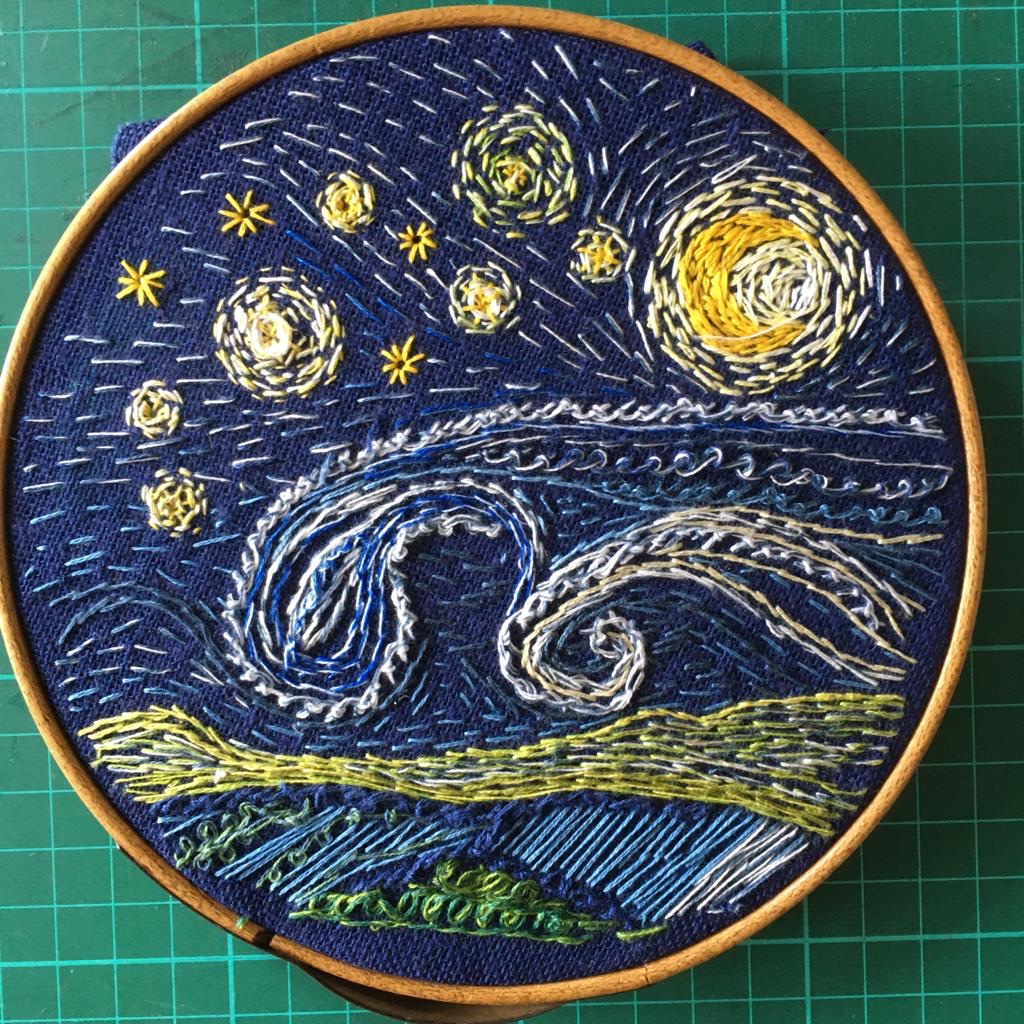
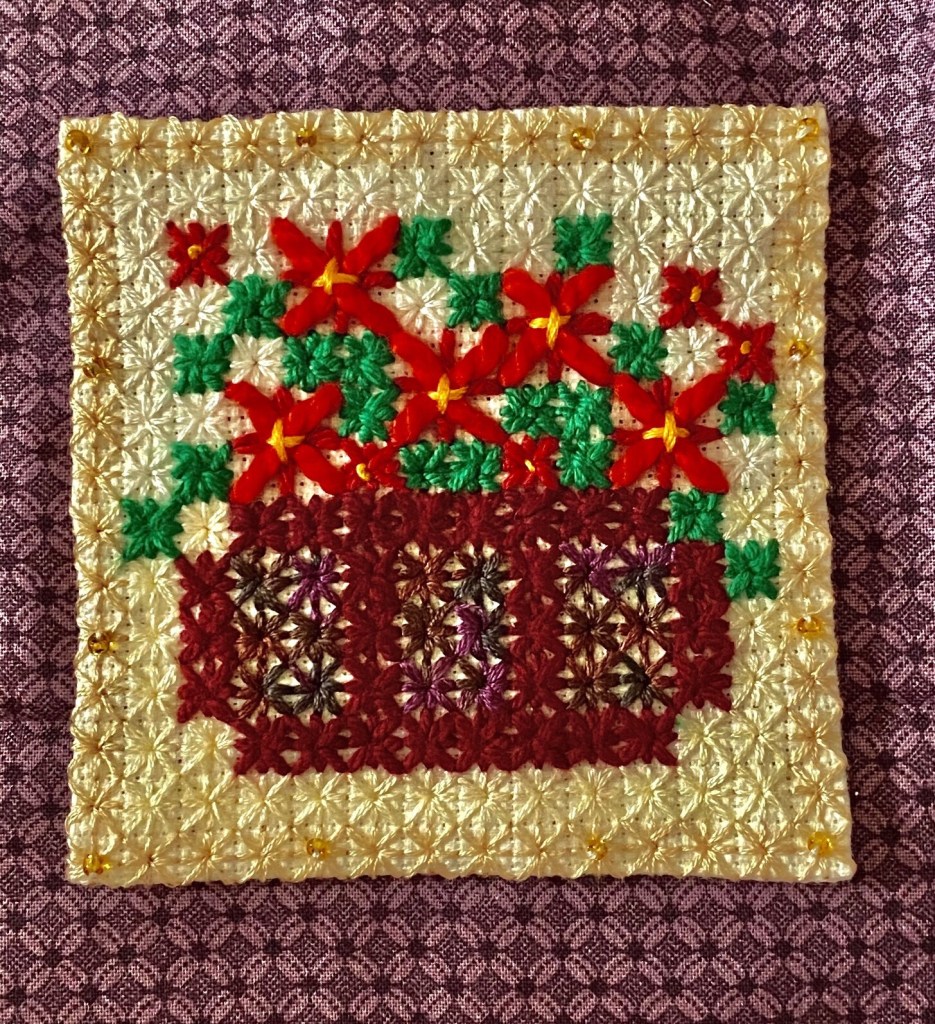
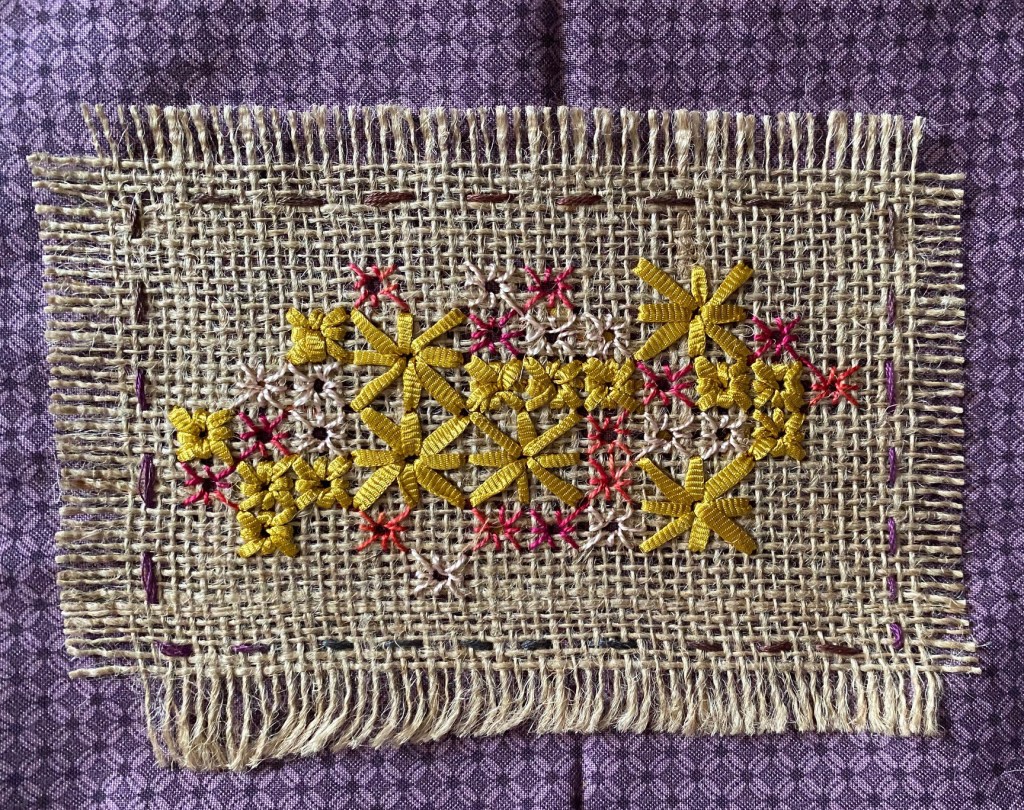
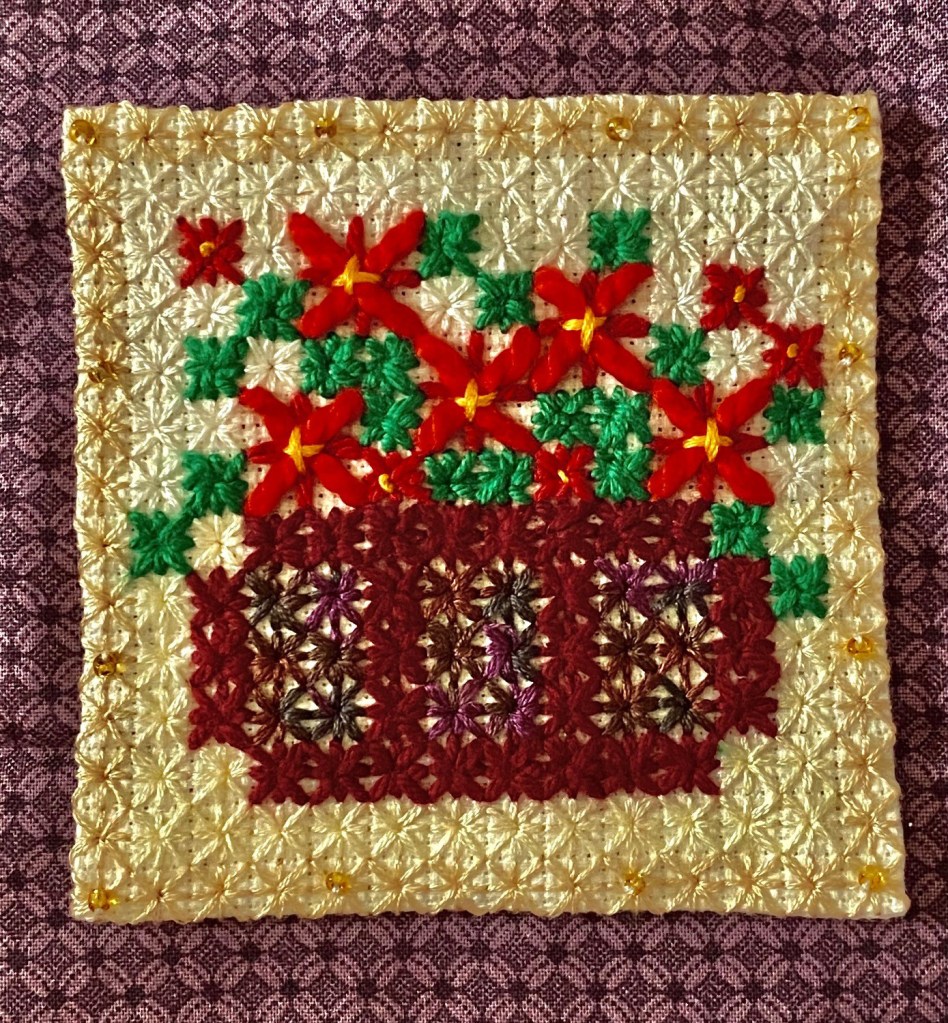
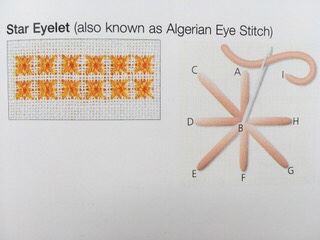
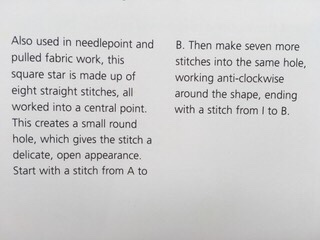
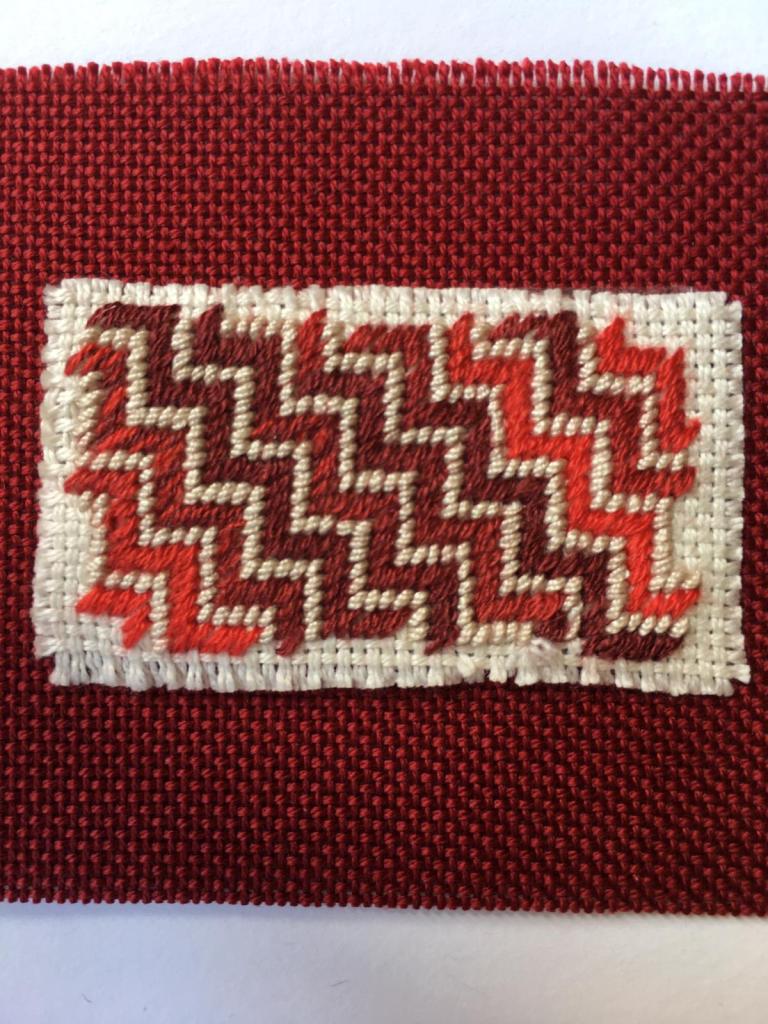
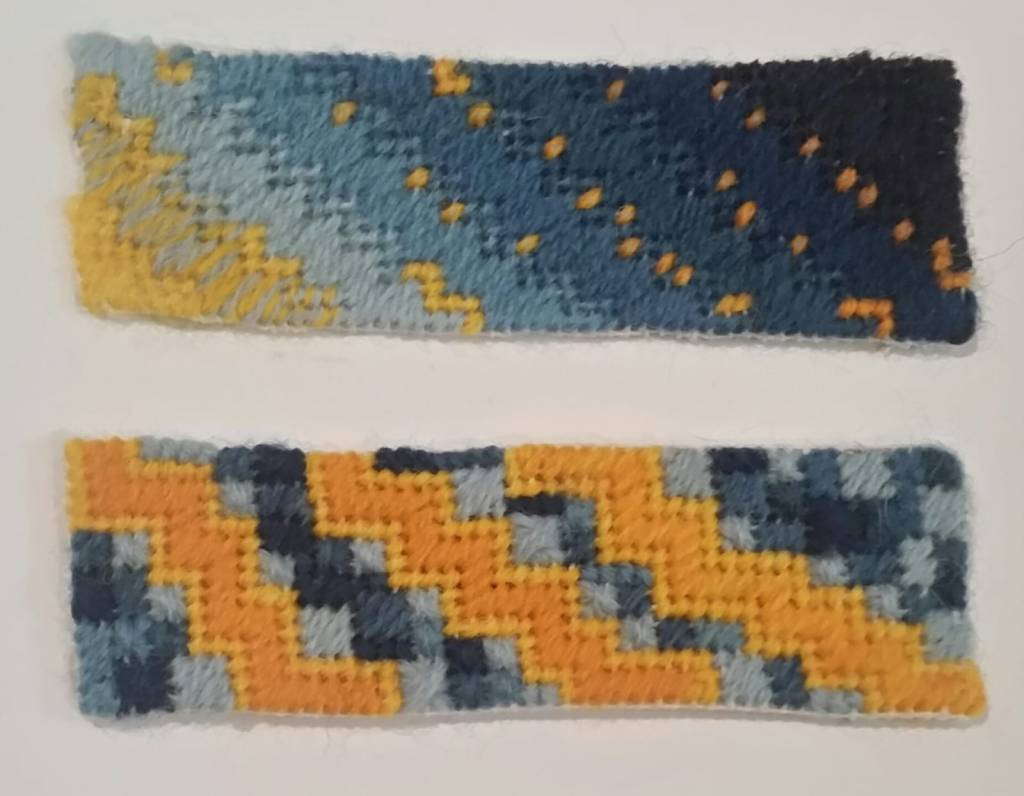
Thank you for the beautiful contributions for Scroll Stitch. Scroll down (!) to see Algerian Stitch from last month: it’s Janet Lee’s lovely contribution. Meriel’s Van Gogh-inspired piece also includes the same stitch.

Bye for now.

An Algerian basket of blooms

September Challenge

Stitch of the Month

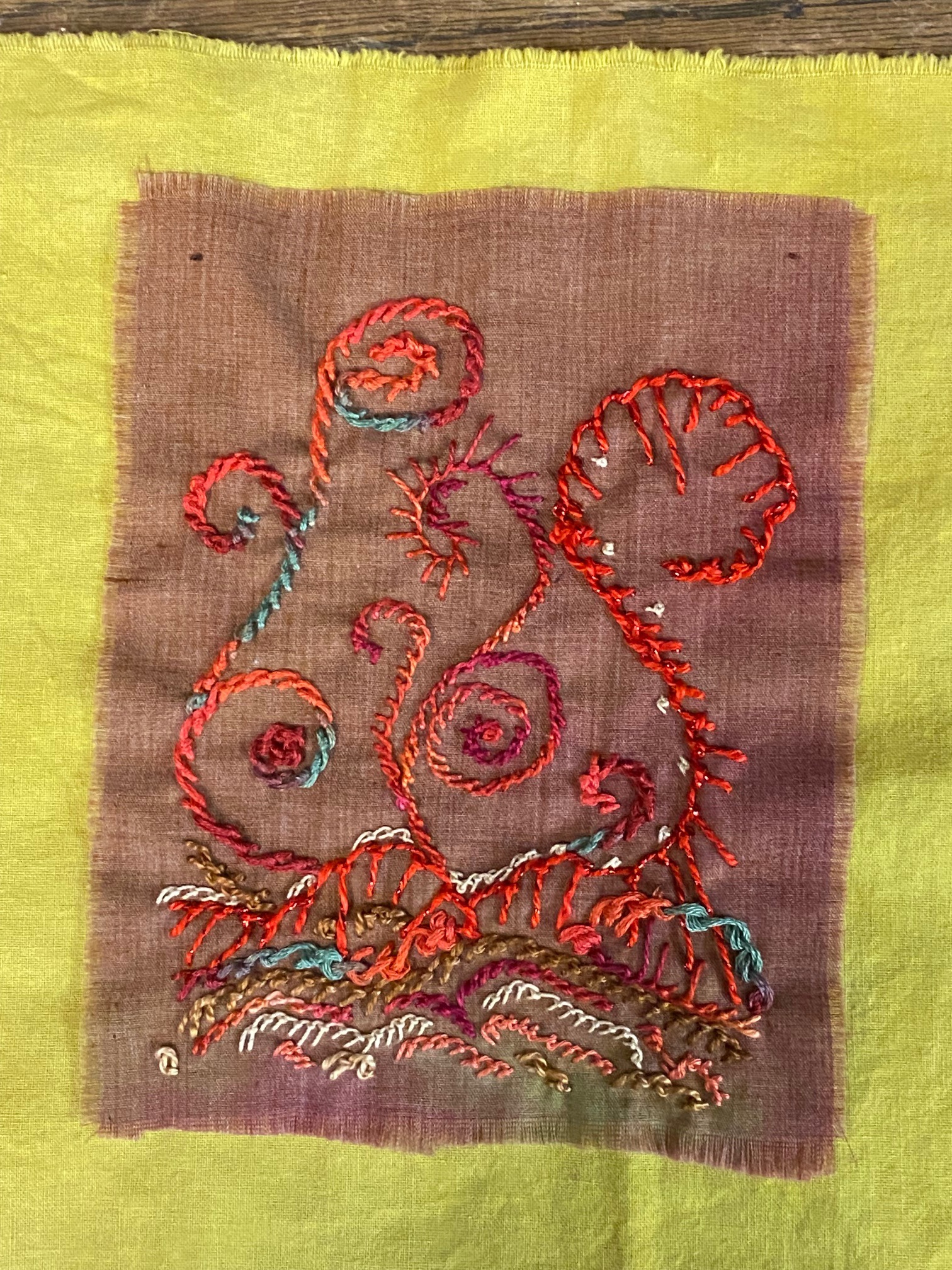
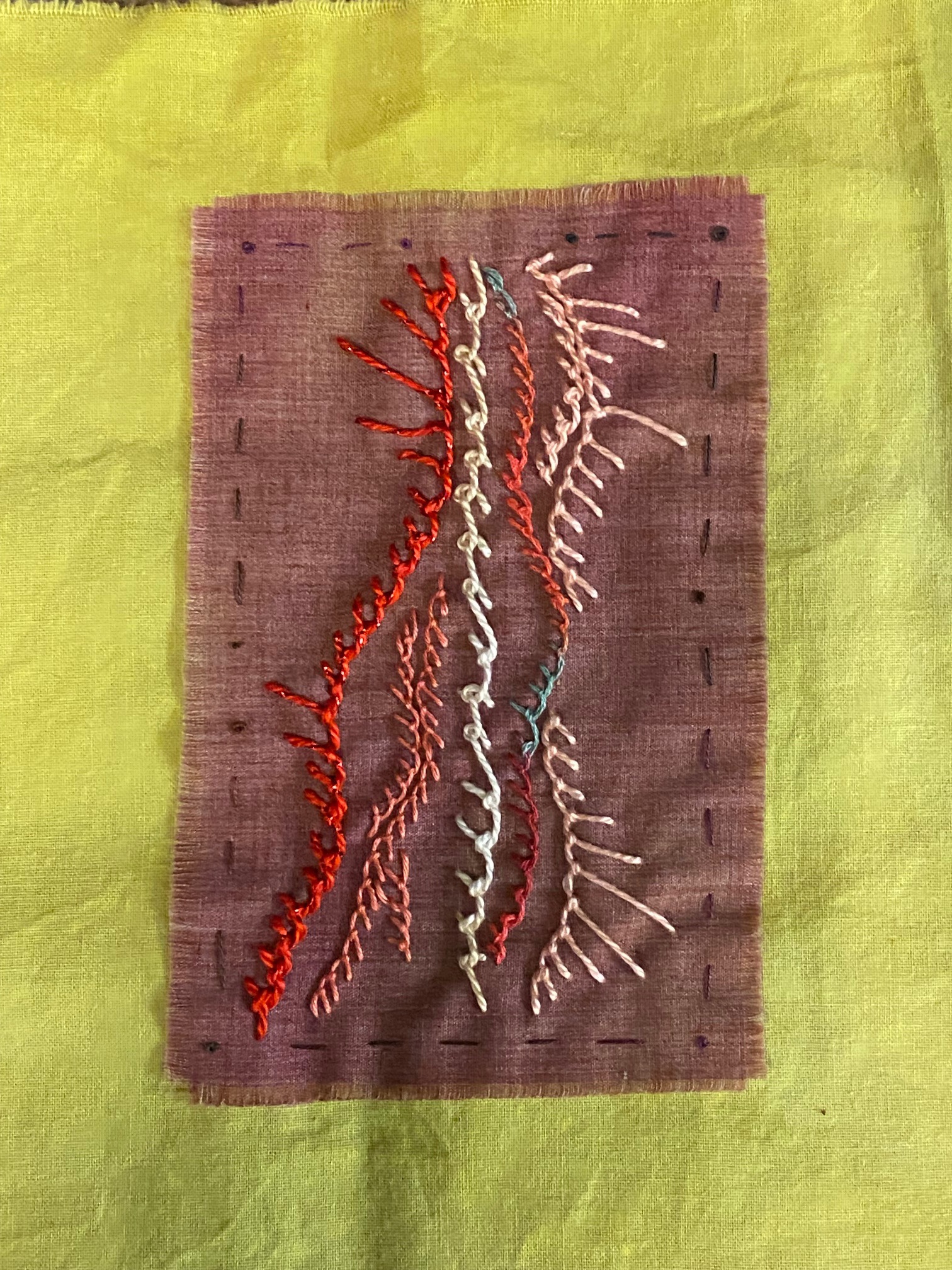
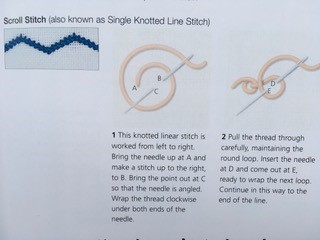
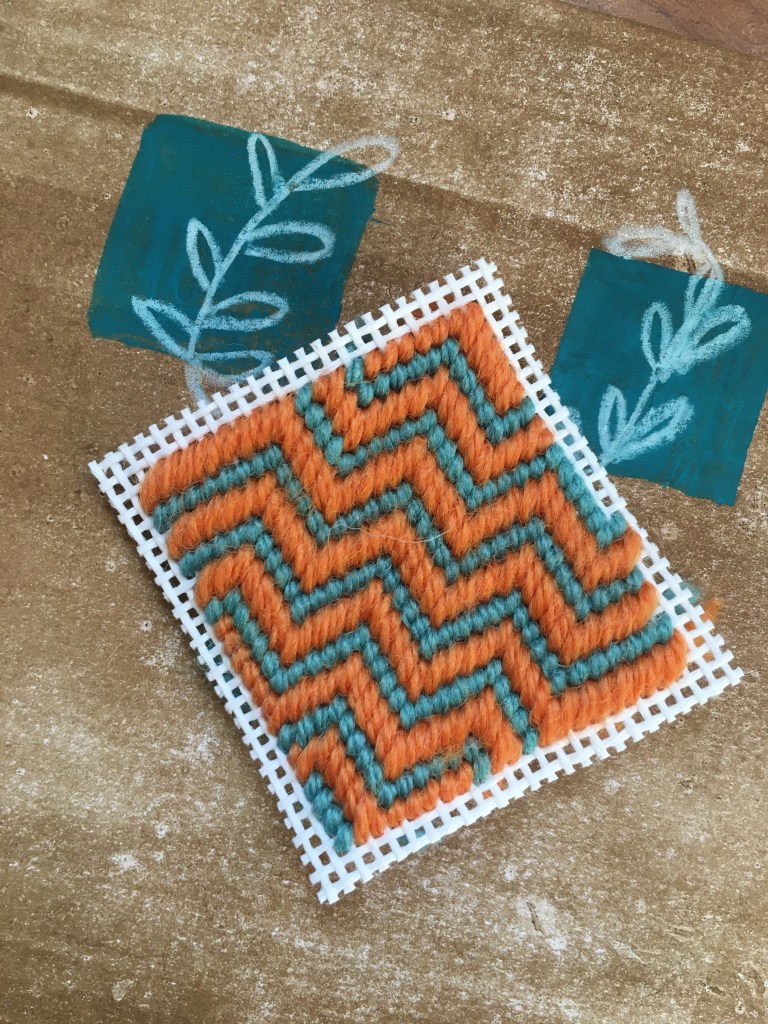
September’s Stitch of the Month is Scroll Stitch, also known as Single Knotted Line Stitch.

Lines of scroll stitch set in different relation to each other can make an attractive border (see picture).

Good luck!

Algerian Stitch

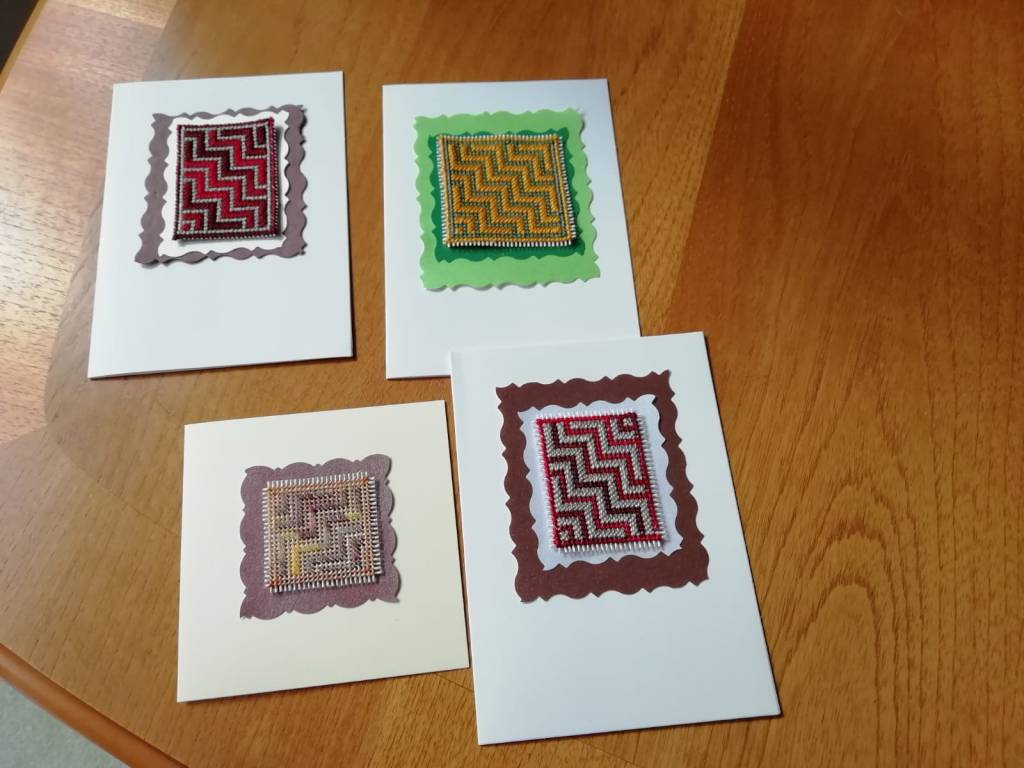
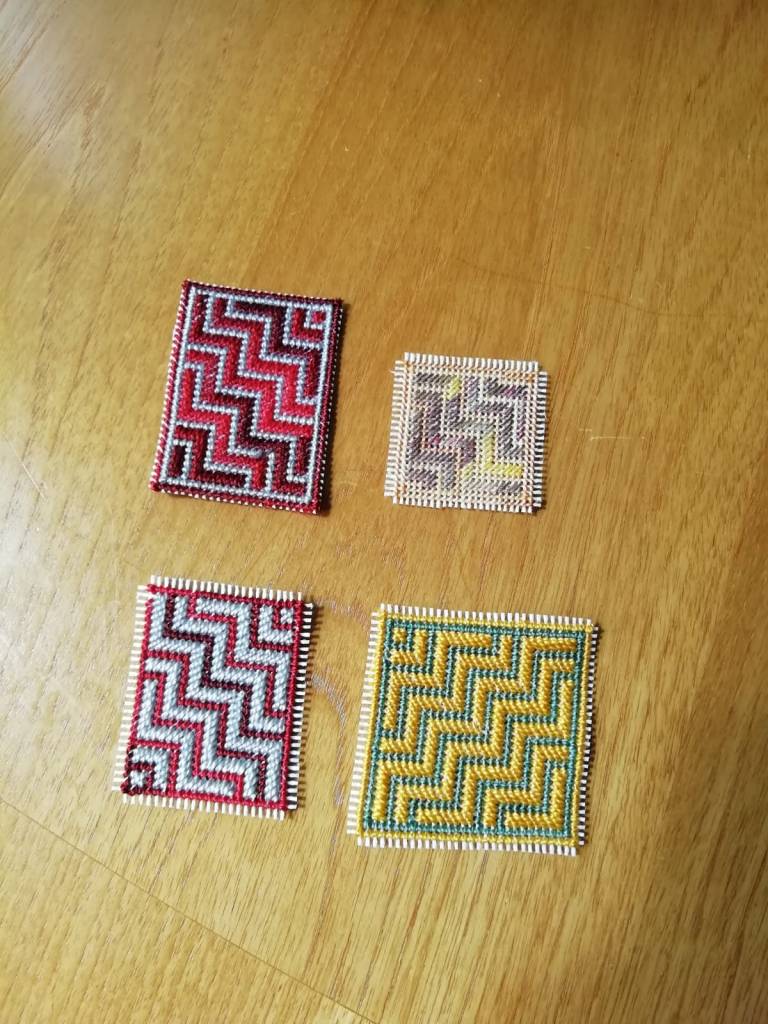
It’s not too late to send in your entries for Algerian Stitch. Here’s a couple of superb examples from Janet Lee by way of inspiration:

Celebrating Birmingham

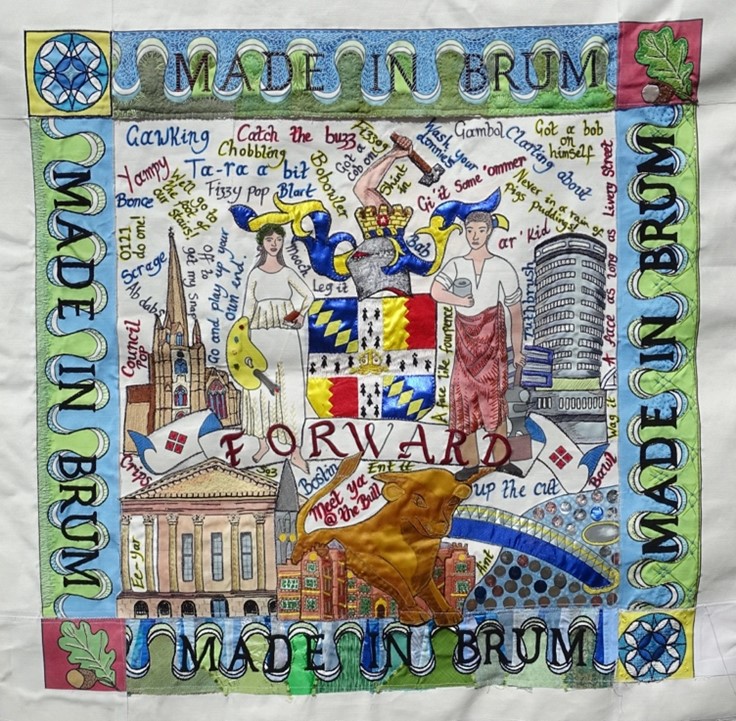
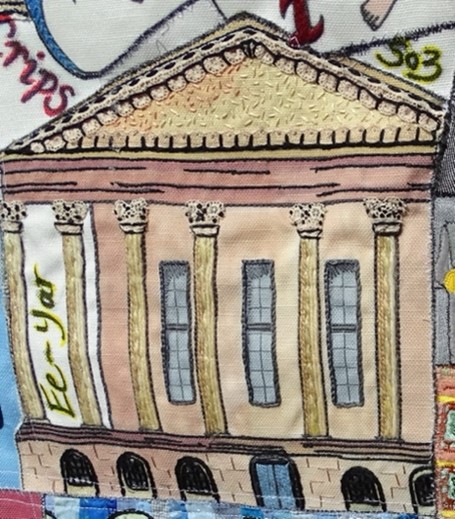
How do you render the Birmingham Bull and iconic Birmingham buildings in embroidery?

This was the challenge set in April to a group of embroiderers from Birmingham and Solihull by Threads Together.

Threads Together is a charitable organisation created to celebrate the 2022 Commonwealth Games coming to Birmingham. Their aim is to produce embroidered panels to represent every competing country as well as a panel representing the host city.

One of the organisers is a member of Birmingham Embroidery and Textile Art and she approached members to take part in stitching the elements from the first panel representing Birmingham. Members from Solihull (Solihull Creative Textiles) also got involved.

Due to Covid restrictions the key elements were cut out and distributed to several embroiderers and we set to work during April to complete the motifs. We were given complete freedom to do them how we wanted to, so even the repeated elements in the borders are each stitched differently.

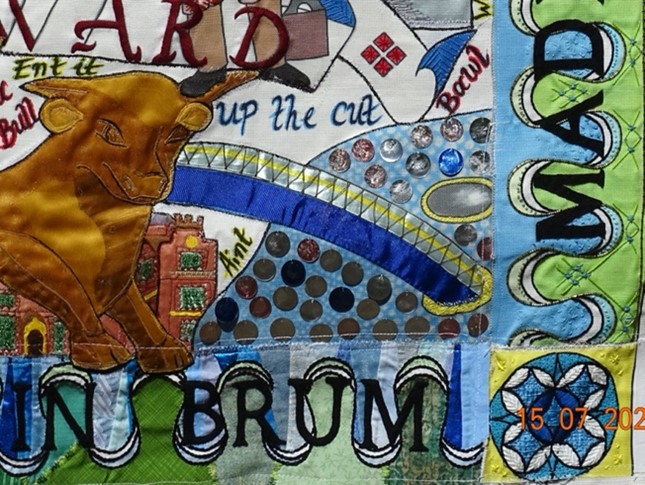
One person had fabric perfect for the bull but was stitching something else so she passed the fabric onto the stitcher of the bull. Another used different coloured metallic threads for each letter of the border to represent the different the metals used in the jewellery trade, lace from another’s stash worked perfectly for the decoration on the Town Hall columns, and sequins became the discs on Selfridges store exterior.

The finished panel is 1 metre square and the intention is to display all the panels across Birmingham and the Commonwealth venues during the games in 2022.

I think I speak for everyone in saying we enjoyed stitching the elements and seeing them come together in the finished panel is very pleasing. We look forward to working on others if we get the chance. The words on the final piece are all phrases local to Birmingham and it’s hoped other panels will have similar approaches to represent the different countries in the Commonwealth.

Birmingham has one of the UK’s most diverse cultural mixes and the Threads Together team hope that other panels can be stitched in community events with those with a connection to the competing countries getting involved.